

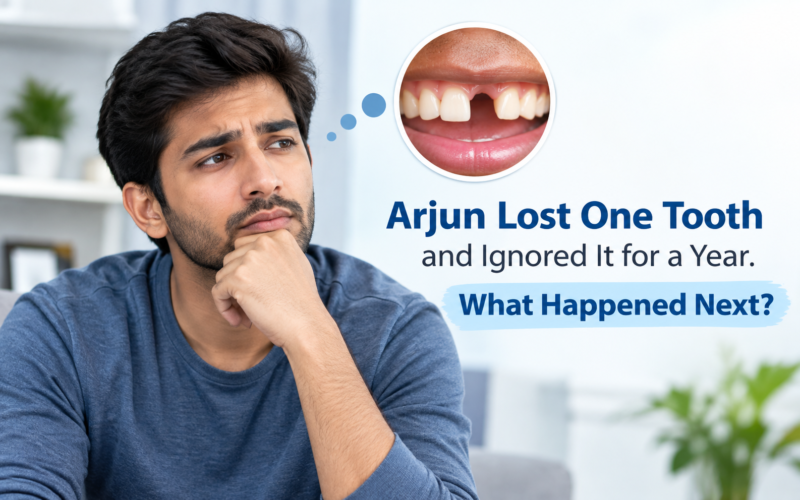
Arjun lost a tooth and decided not to worry about it. He could still chew, the gap wasn’t very noticeable when he smiled, and there was no pain to remind him about it. So, like many people, he put off getting it replaced.
A year later, he finally visited a dentist. The consultation wasn’t just about filling the gap. The dentist also needed to assess the surrounding teeth, gum health, bite and jawbone before deciding on a suitable replacement. A missing tooth can affect more than appearance, even when it doesn’t hurt.
What Happens When You Leave a Missing Tooth Untreated?
Losing one tooth may not seem like a major problem at first. You can still eat, speak and get through the day. But the effects can become noticeable over time.
When a tooth is missing, the neighbouring teeth may gradually shift towards the empty space. This can change how your upper and lower teeth meet, sometimes affecting chewing.
The jawbone beneath the missing tooth can also lose some of its stimulation because there is no longer a natural tooth root in that area. Bone changes vary from person to person, but they can influence future replacement options.
Other concerns may include:
- Food getting trapped around the gap
- Changes in chewing comfort
- Movement of neighbouring teeth
- Difficulty cleaning certain areas
- Changes in the appearance of the smile
None of these outcomes is inevitable in every case. Still, a missing tooth is worth discussing with a dentist rather than leaving it indefinitely.
Why Did Arjun Need a Dental Examination First?
Arjun expected the dentist to recommend a replacement and move straight to treatment. Instead, the first step was an assessment. That makes sense because the best replacement depends on the condition of the mouth, not just the size of the gap.
A dentist may check the following:
- Whether the gums are healthy
- The amount and quality of bone in the area
- The condition of neighbouring teeth
- The patient’s bite
- Any signs of infection or untreated dental problems
Dental X-rays or a CBCT scan may be recommended when needed to assess the bone and plan implant placement.
This assessment helps the dentist decide whether an implant is suitable immediately or whether another issue needs attention first.
Can a Dental Implant Replace Arjun’s Missing Tooth?
A dental implant is one option for replacing a missing tooth. It uses an implant placed in the jawbone to support a replacement tooth, usually a crown.
For patients exploring dental implants in Delhi, the treatment plan may involve several stages:
- Assessment: The dentist examines the mouth and reviews any necessary imaging.
- Planning: The implant position and restoration are planned according to the available bone and bite.
- Implant placement: The implant is placed under appropriate anaesthesia.
- Healing: Time is allowed for the implant to integrate with the bone when required.
- Crown placement: A custom-made tooth is attached once the dentist determines that the site is ready.
Not everyone needs the same timeline. Some patients may require treatment for gum disease or a bone graft before implant placement. Others may be suitable for a more straightforward procedure.
What Are the Other Options for Replacing a Missing Tooth?
An implant isn’t the only choice. Depending on the clinical situation, a dentist may discuss:
- Dental bridge: A fixed replacement supported by neighbouring teeth or implants, depending on the design.
- Removable partial denture: A removable appliance used to replace one or more missing teeth.
- Dental implant with a crown: A fixed option that replaces the tooth root and visible tooth.
Each has different advantages, limitations, costs and maintenance requirements. The right choice comes down to oral health, clinical suitability, budget and personal preference.
At Matrix Dental & Skin Lounge, implant treatment includes clinical assessment and individual treatment planning for patients with missing teeth. Dr. Saurabh Nagpal, a prosthodontist and implantologist, treats implant and restorative cases at the clinic’s Delhi locations.
Summary
Arjun’s story is a reminder that a missing tooth can remain painless while changes occur around the gap. Early assessment gives a dentist the chance to evaluate the bone, gums, neighbouring teeth and available replacement options. Matrix Dental & Skin Lounge provides implant and restorative dental care in Delhi, with treatment recommendations based on each patient’s needs.
If you’ve been postponing a consultation because the gap doesn’t hurt, it may be time to have it checked. You don’t need to wait for another problem to appear before looking at your options.
Frequently Asked Questions
- Is it necessary to replace a missing tooth?
Not every case requires the same treatment, but a dentist should assess the gap and explain the possible effects of leaving it untreated.
- Can a missing tooth affect neighbouring teeth?
Yes. Nearby teeth may shift towards the space, potentially affecting alignment, bite and cleaning.
- Are dental implants suitable for everyone?
No. Bone support, gum health, medical history, smoking and oral hygiene can all affect suitability. A dental assessment is needed.
- How long does dental implant treatment take?
It varies. Some cases need several months for healing, while others may involve additional procedures that extend the timeline.
- What are the alternatives to dental implants?
Depending on the case, a fixed dental bridge or removable partial denture may be suitable. A dentist can explain the differences and help you compare options.